
Relay & Protection Coordination
Selective, correctly graded protection settings and coordination curves.
Protection that is selective and safe
NEWATT develops protection settings and time-current coordination so the nearest device clears a fault first, minimising disruption.

Study scope
Overcurrent & earth fault
Phase and earth-fault overcurrent protection is graded from the utility interface down through every level of distribution, following IEEE 242 coordination principles to establish settings that trip the correct device first while maintaining backup protection for every element in the network.
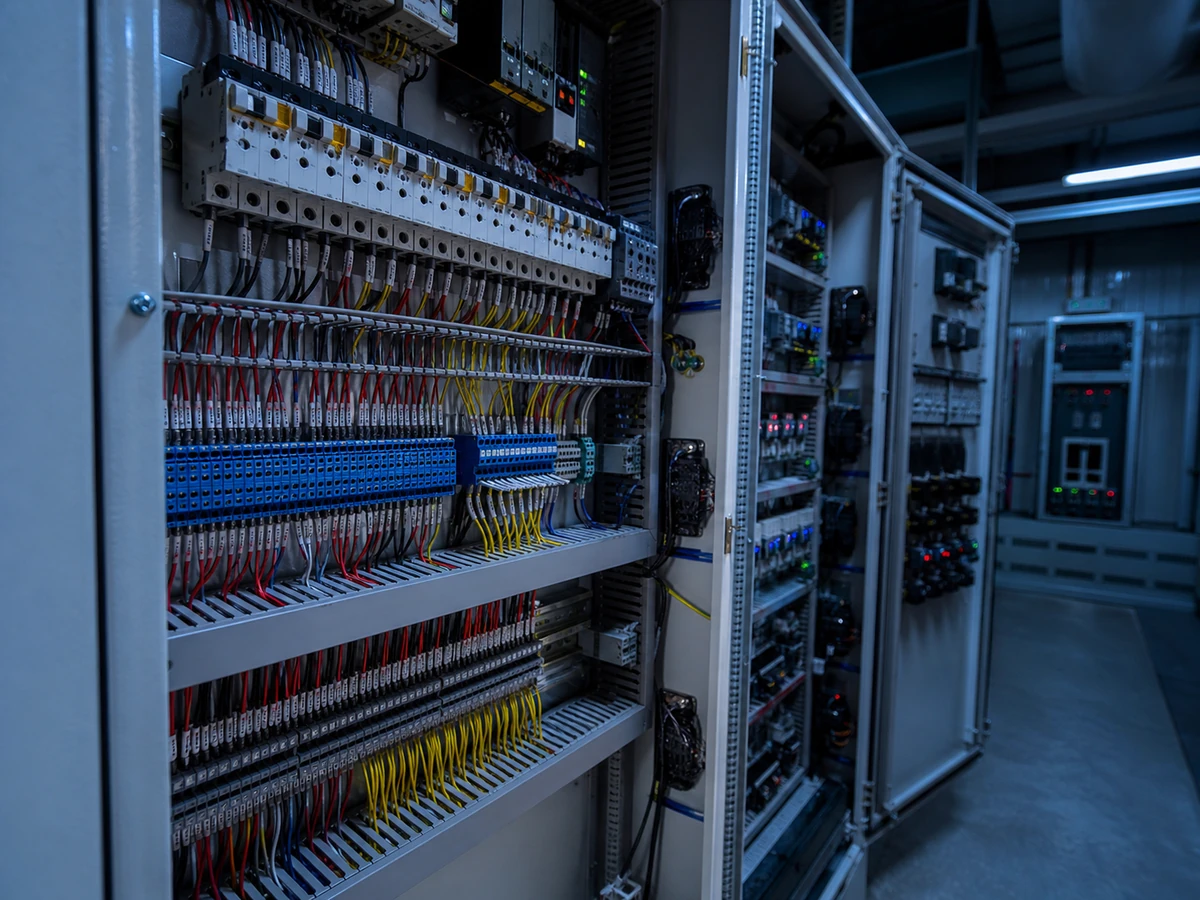
TCC coordination
Time-current curves for every protective device are coordinated on a single chart, with grading margins checked at every point curves overlap to confirm adequate separation between primary and backup protection across the full range of fault current the devices could see.

Unit protection
Differential and other unit-protection schemes are designed for transformers, busbars and feeders where fast, selective protection is needed, with CT ratio matching and restraint characteristics calculated specifically for the protected equipment rather than copied from a similar but different application.
Relay settings
Setting sheets for every relay in the coordination study are prepared ready for commissioning, in the format the site commissioning team needs to programme the actual devices, cross-referenced back to the coordination study so the basis for every setting is traceable.
How we deliver
Standards
Coordination follows IEEE 242 (the Buff Book) principles as the primary methodology, with IEC standards applied where the project's equipment or region requires it, and the governing standard for each aspect of the study documented explicitly.

Software
Coordination studies are performed in ETAP StarZ or DIgSILENT, with TCC curves and setting calculations generated directly from the software model so results are consistent between the study report and the setting sheets issued for commissioning.

Outcomes
The study delivers a coordination report and a full set of setting sheets, structured so the client's commissioning team or protection engineer can implement every setting directly without needing to reinterpret the study's findings.